
Seeds of Success: The Qingdao Factory That Masters the “Small Things”
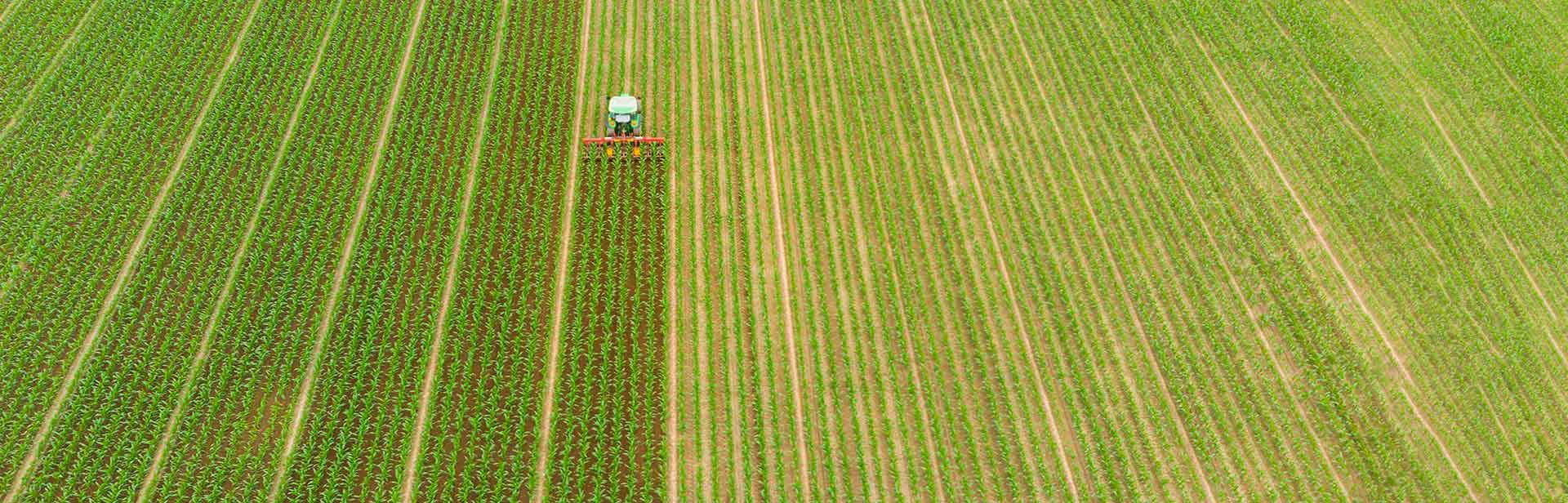
In the world of agriculture, it’s often the biggest machines that grab the headlines. But in the vegetable and herb farms of Qingdao, the real star is a machine that focuses on the smallest detail: the individual seed. For over ten years, Qingdao Dashun Jingfeng has built its reputation not on size, but on the precision with which it handles the delicate beginnings of plant life.
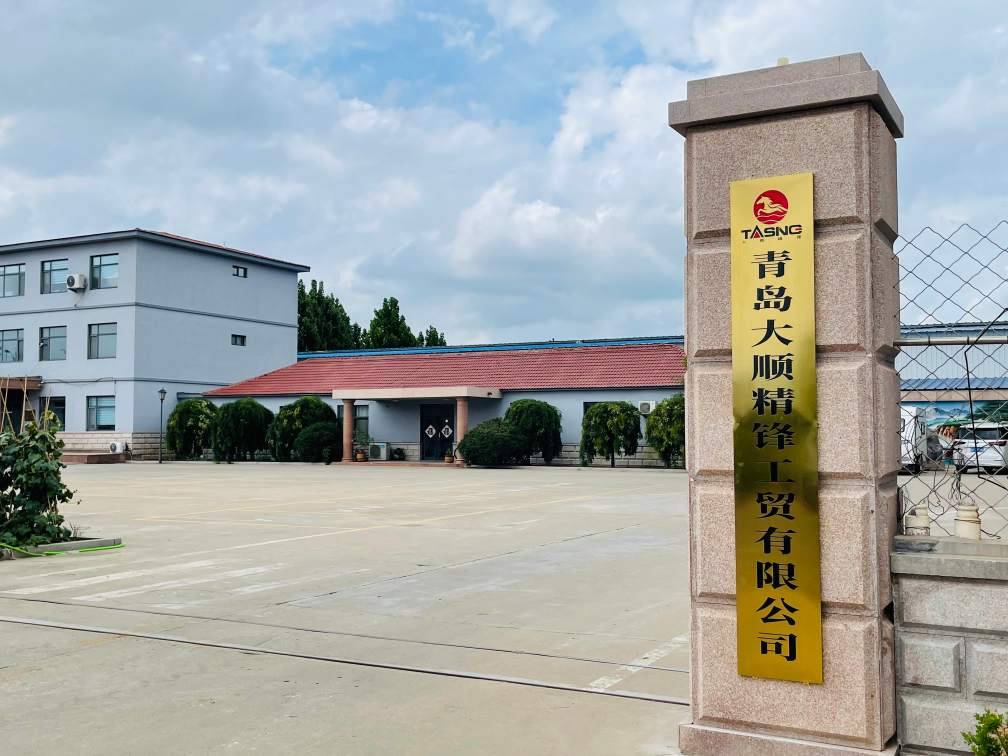
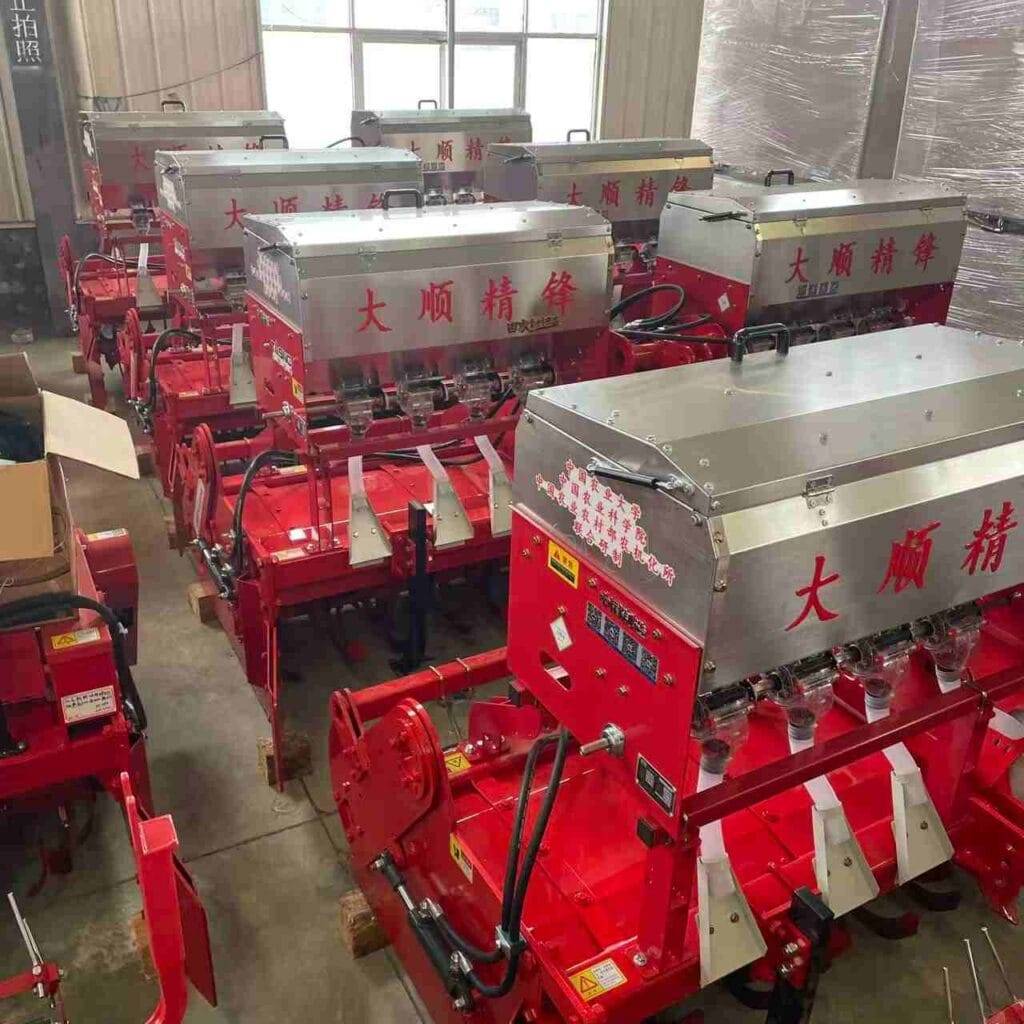
Located in Dianbu Town, the company started with a simple observation: every crop is different. A carrot seed is not a corn kernel, and a cabbage seed is not a soybean. Treating them the same way leads to waste, gaps in the field, and lower profits. This realization became the company’s mission. They set out to create a “wardrobe” of planters, where each machine is tailored to the specific needs of a seed.
The challenge is most evident with crops like Bupleurum or Saposhnikovia, medicinal herbs with tiny, oddly shaped seeds that are notoriously difficult to plant mechanically. Standard planters either crush them or fail to pick them up at all. Dashun Jingfeng’s engineering team, working in their integrated R&D facility, spent years experimenting with different seed disc materials, hole sizes, and air pressures. The result is a machine that can handle these fussy seeds with the gentleness of a human hand, but at the speed and consistency that only a machine can provide.
This mastery of the “small things” has significant ripple effects. When a farmer uses their specialized carrot planter, the uniformity of the crop is dramatically improved. All carrots grow to a similar size and mature at the same time. This makes harvesting more efficient and creates a more uniform product for the market, which commands a better price. It transforms farming from a gamble into a predictable business.
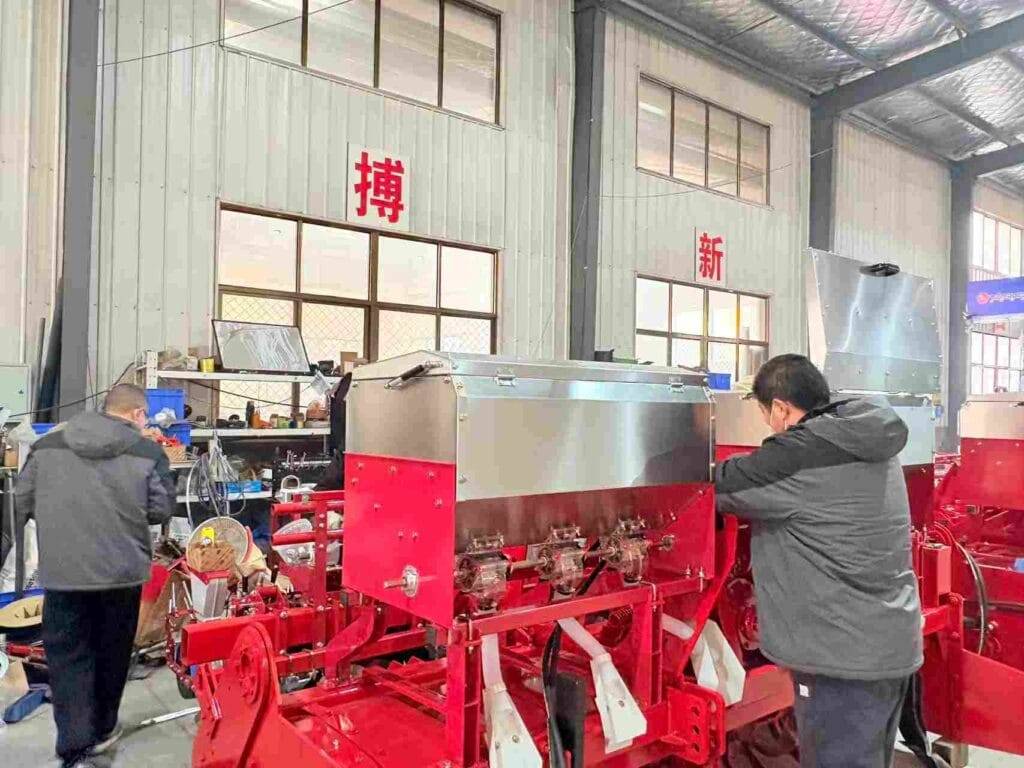
En factory floor itself is a testament to their philosophy. It’s not a noisy assembly line of generic parts, but a workshop where skilled technicians calibrate each machine before it ships. They test the suction of the imported fans, check the alignment of the seed plates, and ensure that the frame is perfectly balanced for the local soil conditions. Because they control the entire manufacturing chain, they can offer customizations that larger, less agile companies cannot.
Their success has created an unexpected cultural exchange. International buyers from countries like Russia and Canada visit the factory in Laixi, often bringing samples of their local soil and seeds. They work alongside the Chinese engineers to adapt the machines for different climates and crops. This global-local approach has turned the factory into a hub of agricultural knowledge exchange.
Dashun Jingfeng’s story is a powerful reminder that depth is often more valuable than breadth. By choosing to go deep into the niche of precision planting for small seeds, they have built a business that is resilient, respected, and remarkably effective. Their machines are now the silent partners in countless farms, ensuring that the most critical moment in the agricultural cycle—the planting of the seed—is handled with the precision it deserves.