

Against the backdrop of a continuously growing global population and finite arable land resources, enhancing agricultural productivity, reducing labor costs, and ensuring food security present universal challenges. The automation and precision of onion cultivation have long been focal points in agricultural machinery development. Traditional onion planting relies on manual sowing—a method plagued by high labor intensity, uneven seed distribution, and low germination rates—which severely constrains the industry’s large-scale development.
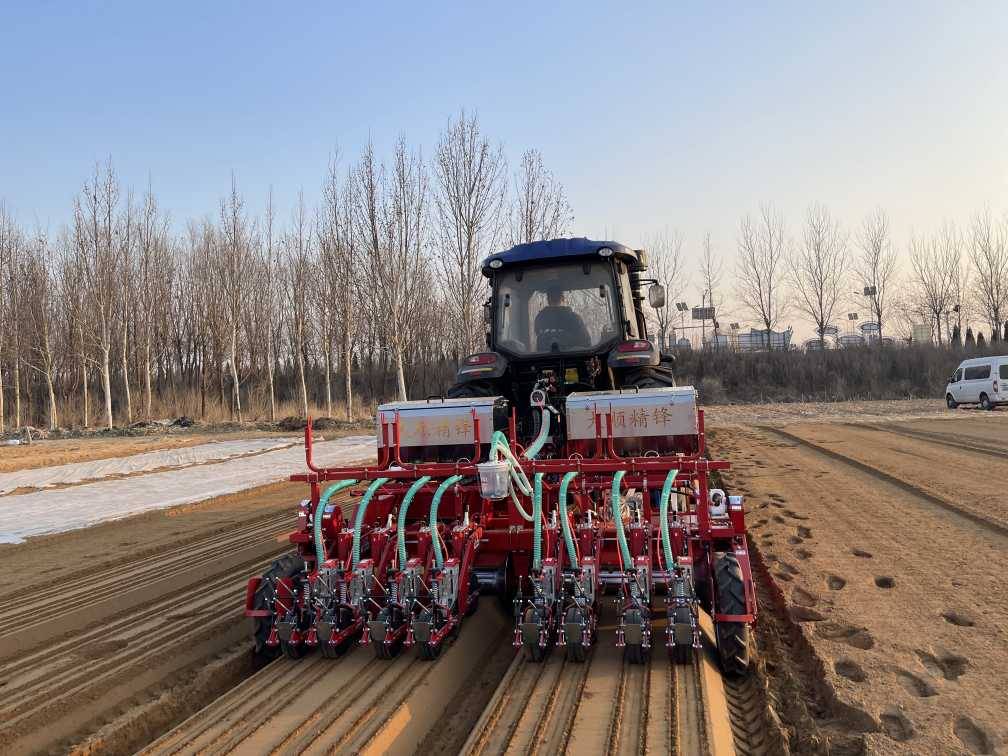
In response, vacuum-suction onion seeders have emerged, sparking a global technological revolution in onion cultivation through their precise and efficient sowing capabilities. This article explores the principles, advantages, current applications, and future trends of this transformative technology.
Technical Principles: The Scientific Core of Precision Sowing
The vacuum-assisted onion seeder is a precision sowing device based on negative pressure adhesion. Its core technology involves using a fan to generate negative pressure airflow, which adheres individual seeds to specially designed suction discs or needles. These seeds are then accurately deposited at predetermined locations via positive pressure airflow or mechanical release mechanisms.
Core Technical Components:
- Negative Pressure Generation System: Incorporates high-efficiency, energy-saving fans to create a stable and controllable negative pressure environment, ensuring reliable seed pickup.
- Precision Seed Suction Device: Features suction discs with various aperture sizes and patterns tailored to different onion seed characteristics, ensuring consistent single-seed pickup.
- Electronic Control System: Integrates sensors, PLC controllers, and user interfaces to enable precise adjustment of sowing density, depth, and spacing.
- Seed Hopper and Clearing System: Designed to prevent clogging with automated clearing functions, avoiding seed blockages and double pickups.
- Monitoring and Feedback System: Provides real-time sowing status monitoring, automatically detects skips and doubles, and offers alerts or compensation to ensure sowing quality.
Compared to traditional mechanical seeders, the air-suction seeder’s key advantage lies in its “zero-damage” seed handling. By using gentle airflow adhesion instead of mechanical gripping, even irregularly shaped or small seeds are treated delicately, significantly improving germination rates and seedling uniformity.
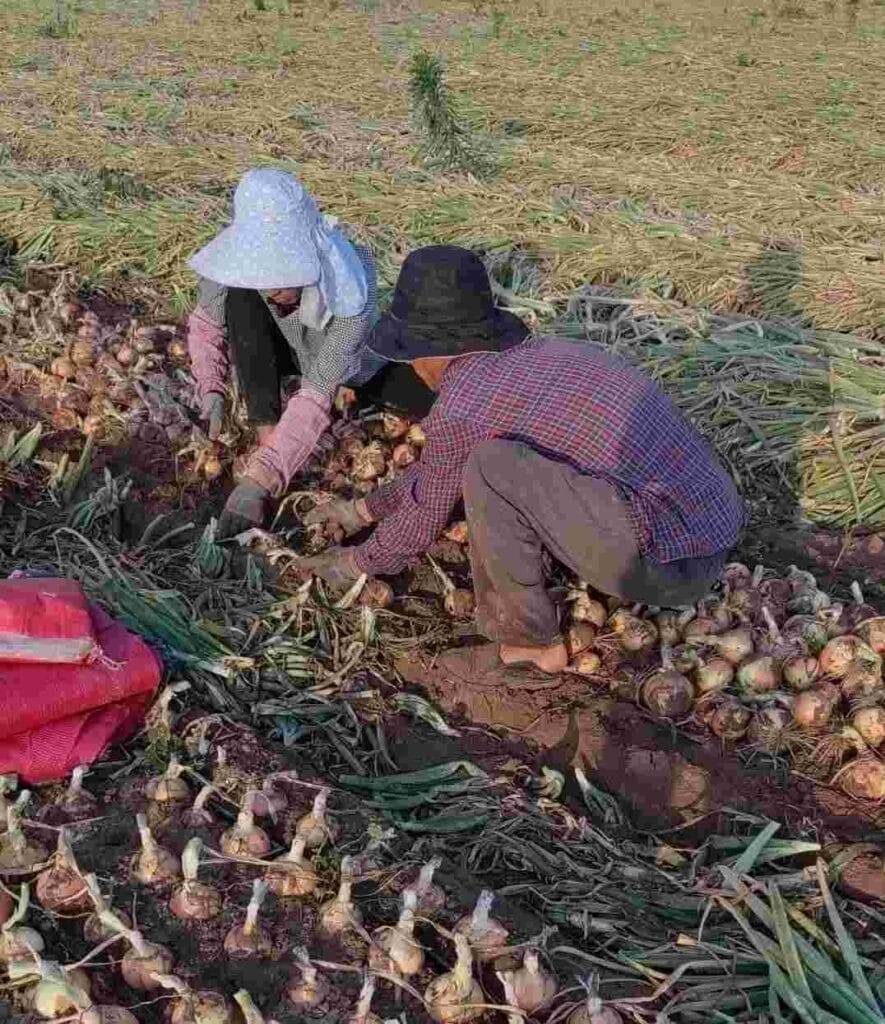
Performance Advantages: A Data-Driven Cultivation Revolution
The adoption of air-suction onion seeders is backed by proven, exceptional performance in real-world applications:
Breakthrough Improvements in Sowing Precision
- Single-seed rate exceeding 98%, far surpassing the 70–85% rate of traditional seeders.
- Re-sowing rate below 1.5%, significantly reducing thinning labor and seed waste.
- Miss rate below 2%, ensuring full and uniform crop emergence without extensive reseeding.
Significant Economic Benefits
- 30–50% seed savings through precision single-seed placement.
- Over 60% reduction in labor costs by automating the sowing process.
- 15–20% improvement in land use efficiency through optimized plant spacing and density.
Broad Agronomic Adaptability
- Suitable for diverse soil conditions, from sandy loam to clay.
- Adjustable sowing depth from 1–5 cm to meet regional agronomic requirements.
- Flexible row and plant spacing settings based on variety and cultivation practices.
User-Friendly Operation and Maintenance
- Modular design allows easy replacement of key components, minimizing downtime.
- Intelligent fault diagnosis automatically detects and alerts to issues, simplifying repairs.
- Energy-efficient operation reduces energy consumption by approximately 25%.
Practical Applications: Global Insights and Localized Innovation
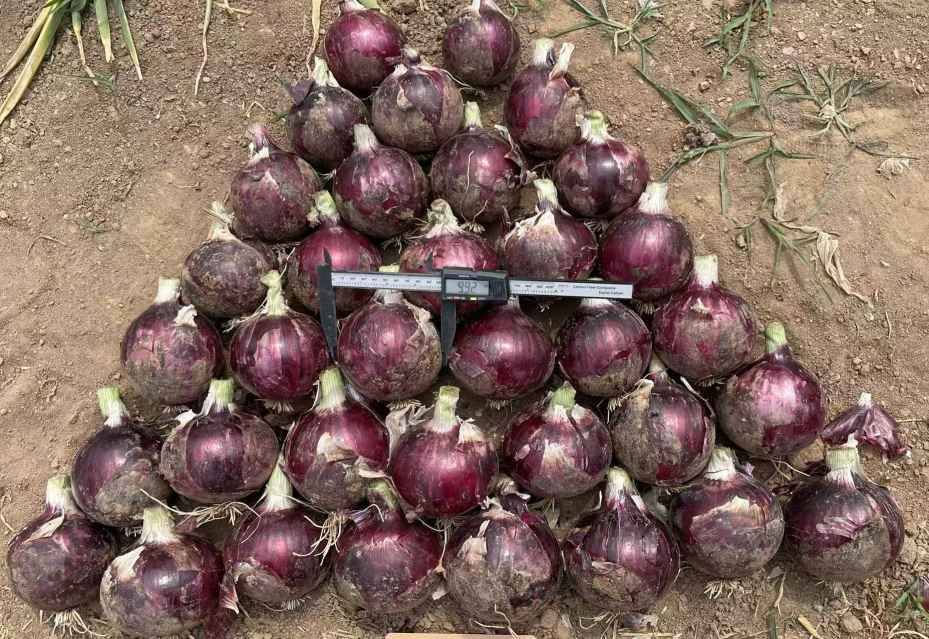
International Adoption
Countries with advanced agricultural mechanization, such as the Netherlands, Germany, and the United States, began adopting air-suction seeding technology in the early 2000s. Research from Wageningen University in the Netherlands shows that using air-suction seeders increased overall onion cultivation profitability by over 35%. In California’s onion-producing regions, the technology raised average yield per acre by 22% within five years while reducing labor costs by around 40%.
Localized Innovations in China
To suit China’s diverse farming environments and small-to-medium-scale operations, domestic manufacturers have introduced several adaptations:
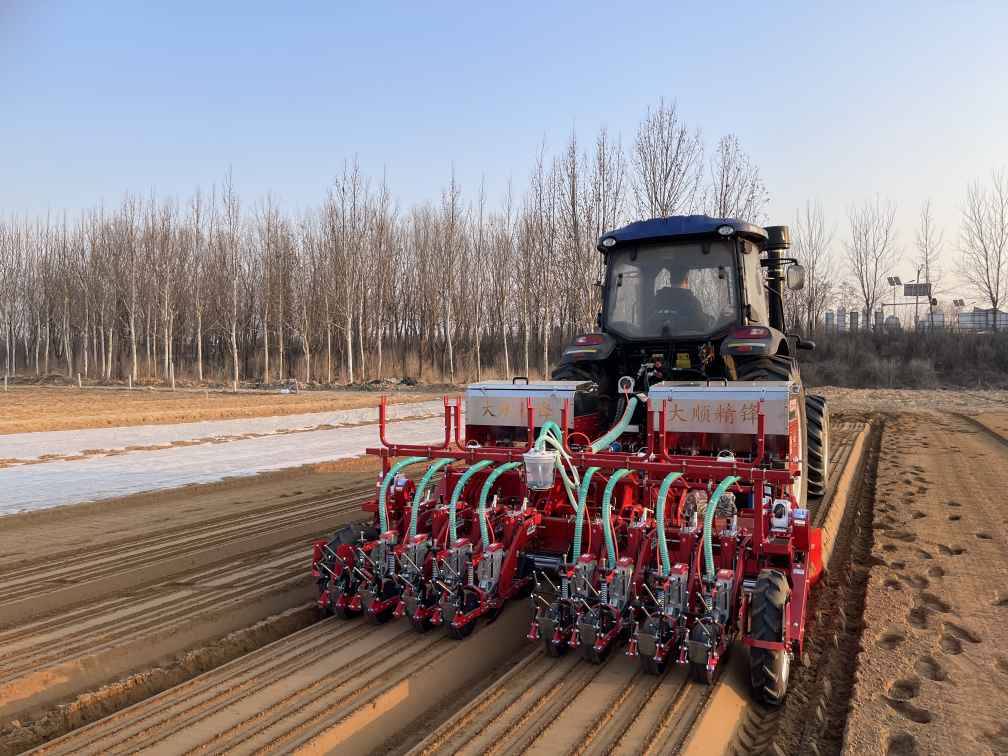
- Adaptive Design: Compact, multi-functional seeders tailored for small plots and ridge cultivation, ideal for family farms and cooperatives.
- Smart Upgrades: Integration with BeiDou navigation for autonomous operation and route planning, plus mobile apps for real-time remote monitoring.
- Multi-Function Integration: Some models combine sowing with laying drip irrigation tape, mulching, and fertilizing, streamlining field operations.
Industrial Impact: Elevating the Entire Supply Chain
The adoption of air-suction seeders is reshaping not only planting practices but also the broader onion industry:
Cultivation Transformation
- Enables standardized production: Uniform sowing provides a foundation for consistent crop management.
- Serves as a gateway to data-driven farming: Sowing data can integrate with growth monitoring, precision fertilization, and smart irrigation systems, supporting a holistic smart agriculture ecosystem.