Introduction: A Revolutionary Breakthrough in Agricultural Mechanisation
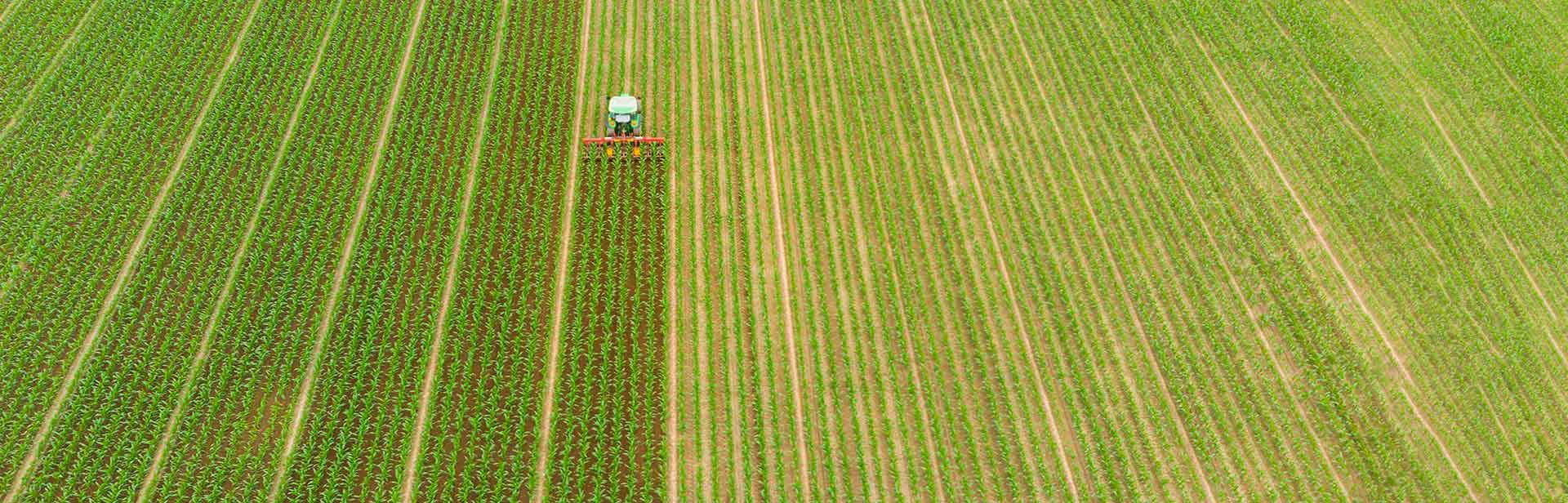
Across the vast fields, a quiet revolution is underway. Traditional agriculture is undergoing a profound shift from labour-intensive to technology-intensive practices. The advent of the sembradora de zanahorias por aspiración de aire heralds a new era of precision in vegetable sowing technology. This innovative device, integrating advanced engineering, intelligent control systems and agricultural science, is redefining efficiency standards and quality benchmarks for carrot cultivation.
Chapter One: Bottlenecks and Challenges of Traditional Sowing Techniques
1.1 The Current State of Carrot Cultivation
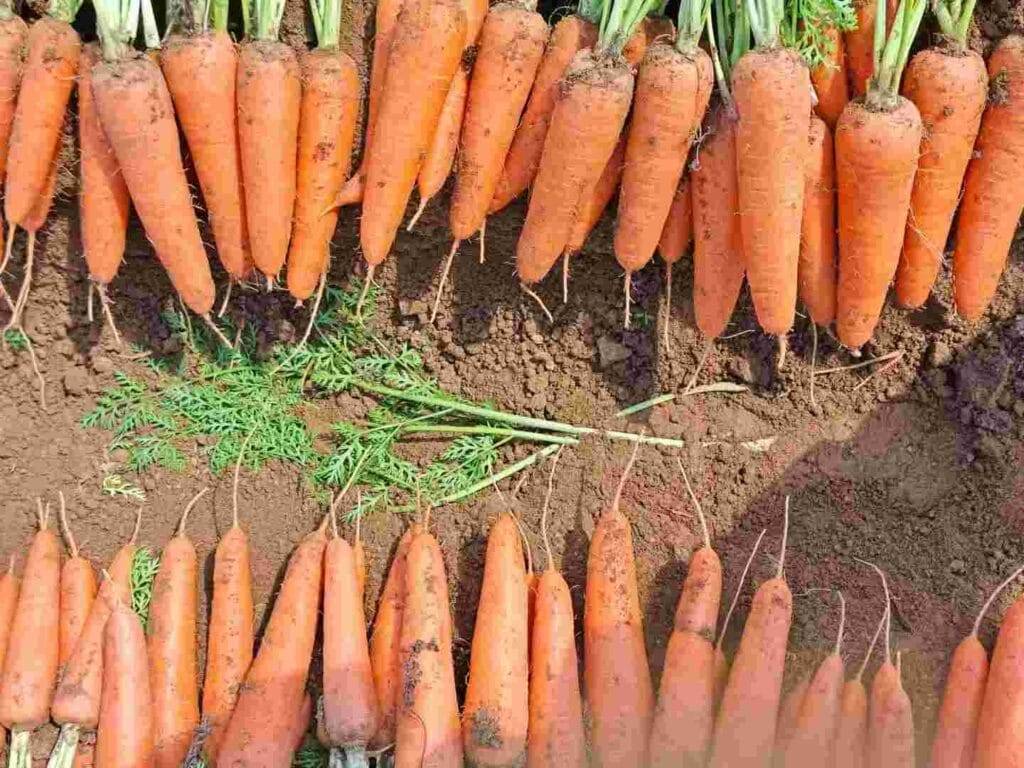
As a globally significant root vegetable, carrot cultivation area and yield have expanded steadily over the past decade. China, the world’s largest carrot producer, cultivates over 6 million mu annually, accounting for more than 40% of global output. However, traditional sowing methods severely constrain the industry’s modernisation process.
1.2 Limitations of Manual Sowing
Traditional manual sowing practices present multiple issues:
High labour intensity and low production efficiency
Difficulty in controlling sowing uniformity, leading to uneven seedling emergence
Heavy reliance on labour, facing dual pressures of rising labour costs and labour shortages
Sowing quality significantly influenced by operator skill levels
1.3 Technical Bottlenecks in Mechanical Sowing
While traditional mechanical sowing equipment has improved efficiency to some extent, it still exhibits notable shortcomings:
Low seed placement accuracy, with common occurrences of double sowing and skipped areas
Poor adaptability to seed size and shape
Difficulty balancing operational speed with sowing quality
High maintenance costs and insufficient reliability
Chapter 2: Principles and Innovative Breakthroughs in Air-Suction Sowing Technology
2.1 Core Technical Principles
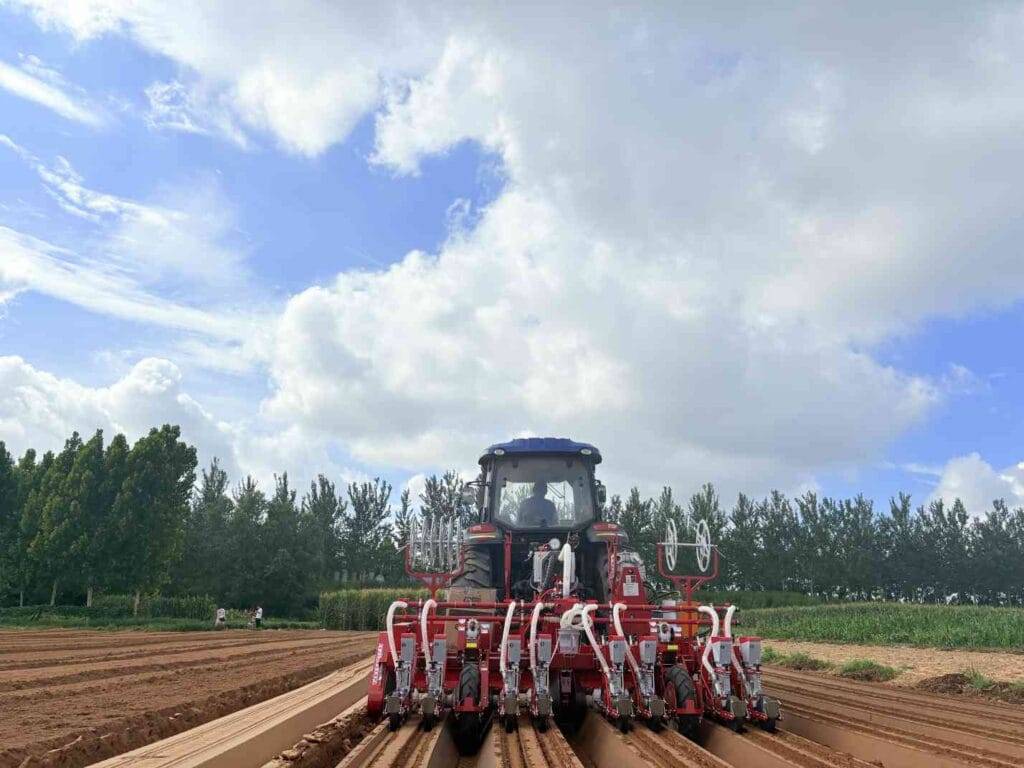
En sembradora de zanahorias por aspiración de aire employs negative pressure adsorption principles, utilising a precision-engineered aerodynamic system to achieve accurate seed separation and positioning. Its operational mechanism comprises four key stages:
Negative Pressure Generation System: A high-efficiency fan creates stable negative pressure, forming a uniform adhesive force field across the seed tray surface
Seed Separation Process: Seeds are precisely adhered to the seed dispensing holes under negative pressure
Precise Positioning and Transfer: Rotation of the seed tray conveys seeds to the dispensing position
Accurate Release and Sowing: Upon release of negative pressure, seeds fall precisely into the seed furrow under gravity
2.2 Key Technological Innovations
Intelligent Control System
Integrated PLC programmable controller enables digital adjustment of sowing parameters
Equipped with real-time monitoring system displaying key data such as sowing speed and density
Automatic fault diagnosis and early warning functionality minimises downtime
Adaptive Adjustment Technology
Dynamic negative pressure regulation system automatically optimises suction parameters based on seed characteristics
Stepless row spacing adjustment accommodates diverse planting patterns
Ground contouring mechanism ensures consistent sowing depth
Modular Design Philosophy
Quick-change seed tray system accommodates diverse carrot seed varieties and specifications
Standardised interface design facilitates functional expansion and maintenance
Flexible multi-row configuration adapts to varying cultivation scales
Chapter 3: Performance Advantages and Economic Analysis
3.1 Technical Performance Metrics Comparison
Metric Conventional Mechanical Sowing Air-Suction Sowing Improvement Rate
Sowing Accuracy 75-85% 95-98% Improved by over 20%
Operational Efficiency 3-5 mu/hour 8-12 mu/hour Increased by 2-3 times
Seed Utilisation Rate 65-75% 90-95% Improved by 25-30%
Uniformity Index 0.6-0.7 0.9-0.95 Significantly enhanced
Adaptability Limited Extensive Substantially enhanced
3.2 Economic Benefit Assessment
Direct Cost Savings
Reduced seed costs: Precision sowing reduces seed consumption per mu by 30-40%
Labour cost savings: Over 30-fold efficiency gain compared to manual sowing
Thinning cost reduction: Uniform emergence reduces thinning workload by over 60%
Yield and Quality Enhancement
Increased yield per mu: Uniform growing conditions boost production by 15-25%
Improved marketability: Well-developed taproots reduce deformity rates from 15% to below 5%
Consistency in specifications: Premium-grade produce proportion increases by over 30%, significantly enhancing market competitiveness
Return on Investment Analysis
Based on a medium-scale (500 mu) carrot cultivation example:
Equipment investment: ¥150,000–250,000 (depending on configuration)
Annual Direct Benefits:
Seed savings: ¥30,000
Labour savings: ¥80,000
Yield/revenue increase: ¥120,000
Total: ¥230,000
Payback Period: 0.8–1.2 years
Five-Year Net Profit: Exceeding ¥1,000,000
Chapter IV: Intelligent Integration and Future Development Trends
4.1 Pathways for Intelligent Upgrades
First Generation Intelligence: Basic Sensing and Monitoring
Real-time seed count tracking
Automatic work speed adjustment
Basic fault diagnosis
Second Generation Intelligence: Data-Driven Decision-Making
Real-time sowing quality assessment
Soil-seed-climate multi-parameter coordination
Cloud-based data management and analysis
Third Generation Intelligence: Autonomous Operation Systems
4.2 IoT Integration Applications
Modern air-suction seed drills are evolving into pivotal nodes within agricultural IoT ecosystems:
Environmental sensor integration: Real-time monitoring of soil temperature, humidity, and compaction
Operational Data Acquisition: Key parameters including sowing depth, density, and uniformity
Cloud Collaboration: Seamless integration with farm management systems for data sharing and intelligent decision-making
4.3 Future Technological Development Directions
Deep Integration with Precision Agriculture
Variable Rate Seeding Technology: Adjusting sowing density based on soil fertility variations
Integrated Seed-Fertiliser Application: Simultaneous completion of sowing and precision fertilisation
Multispectral Perception Integration: Dynamic adjustments based on crop growth status
New Energy and Sustainable Development
5.1 Advancing Agricultural Modernisation
The widespread adoption of suction-type carrot seeders is advancing agricultural modernisation across multiple dimensions:
Production Efficiency Revolution
Seeding efficiency increased by 3-5 times
Labour requirements reduced by over 70%
Operational season shortened by over 50%
Standardised Production System
Establishment of unified seeding quality standards
Achievement of standardised management for large-scale cultivation
Foundation laid for full mechanisation
5.2 Promoting Industrial Chain Upgrading
Upstream Seed Industry Development
Drives standardisation and pelleting of seeds
Promotes adoption of high-quality varieties
Enhances technological value-added in seed production
Downstream Processing Optimisation
Consistent raw material specifications boost processing efficiency
Reduces sorting costs and increases yield rates
Meets demands of premium market segments
5.3 Social and Ecological Benefits
Addressing Labour Challenges
Alleviating pressure from an ageing agricultural workforce
Reducing labour intensity and improving working conditions
Attracting young talent to modern agriculture
Resource Conservation and Environmental Protection
Conserving seed resources by over 30%
Reducing chemical fertiliser and pesticide usage
Lowering risks of agricultural non-point source pollution
Food Security Assurance
Enhanced land productivity
Stabilised vegetable supply capacity
Strengthened agricultural resilience
The pneumatic carrot seeder transcends conventional agricultural machinery; it embodies the trajectory of precision agriculture and carries the promise of agricultural modernisation. Driven by technological innovation and industrial upgrading, this technology is transforming traditional farming practices, optimising resource utilisation, safeguarding agricultural product quality and safety, and fostering increased farmer prosperity.
With the deep integration of next-generation information technologies—such as the Internet of Things, big data, and artificial intelligence—into agricultural machinery, pneumatic seeding technology will evolve towards greater intelligence, precision, and environmental sustainability. In future fields, intelligent seeders will autonomously make decisions based on real-time data, realising true precision agriculture. This will contribute significantly to safeguarding national food security and advancing sustainable agricultural development.
In this era of profound transformation, each technological breakthrough injects fresh vitality into agricultural development. The promotion and application of Sembradoras neumáticas de zanahorias will not only enhance the international competitiveness of China’s vegetable industry but also offer Chinese wisdom and solutions for global food security and sustainable agricultural development. Let us collectively anticipate that upon these fields brimming with promise, technological innovation will continue to sow hope and reap an even brighter future.