
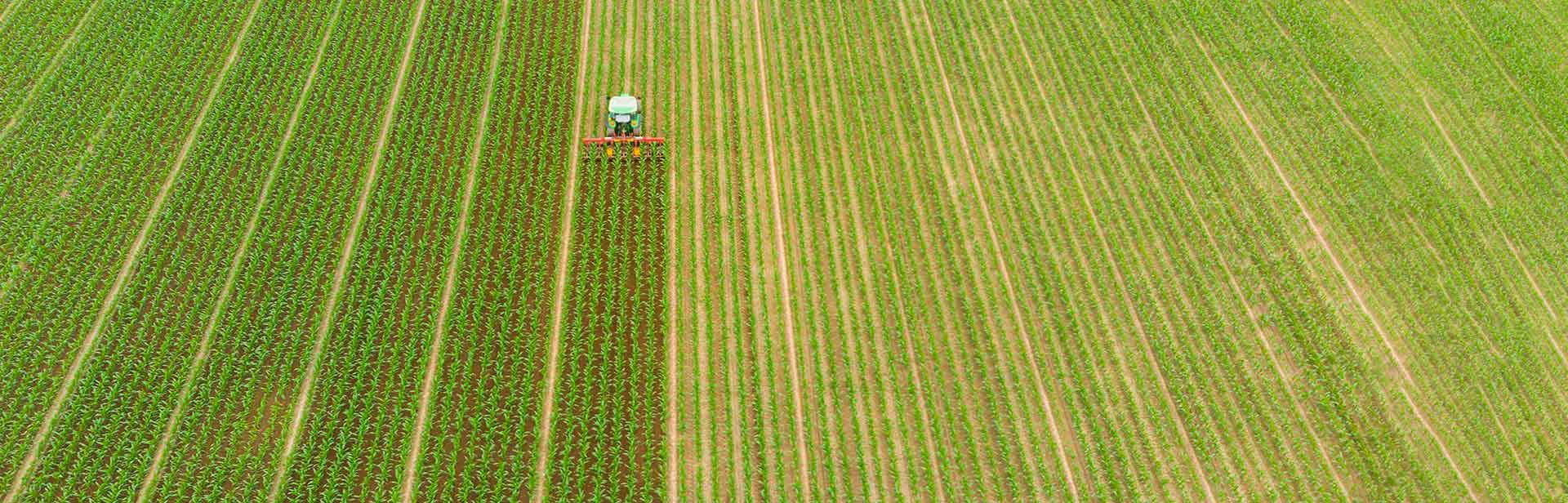
In today’s precision agricultural landscape, pneumatic seeders have established themselves as indispensable equipment for enhancing planting efficiency, primarily due to their exceptional sowing accuracy. These advanced machines represent a significant departure from traditional broadcast seeding methods, offering farmers unprecedented control over seed placement. So, how exactly does this sophisticated equipment operate? What engineering principles enable its “pneumatic” technology to achieve such remarkably consistent sowing results? A thorough exploration of its operational logic reveals how contemporary agricultural technology successfully translates theoretical engineering concepts into tangible productivity gains.
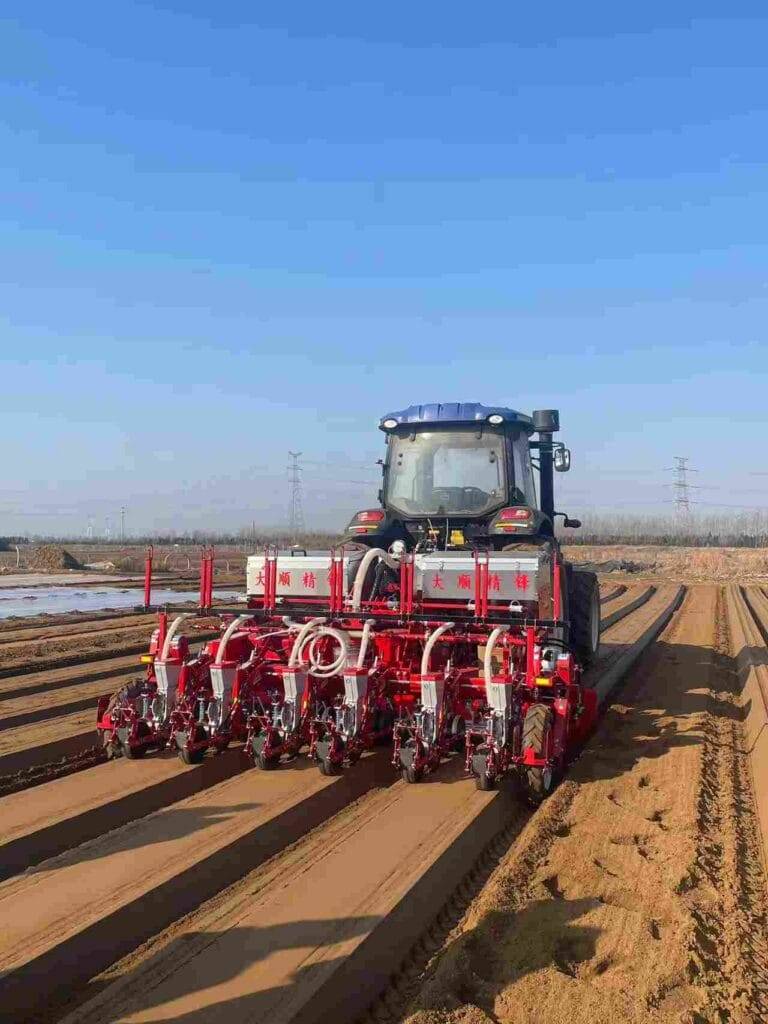
The superior performance of pneumatic seeding systems originates from their meticulously engineered “negative-pressure adsorption, positive-pressure release” mechanism. When the equipment is activated, an integrated fan system creates a stable vacuum on one side of a precision-drilled seed disc. This pressure differential between the vacuum chamber and atmospheric pressure enables individual seeds to be securely adsorbed onto the suction holes of specific dimensions on the rotating disc. As the machinery advances across the field, the disc systematically transports these carefully positioned seeds to the designated discharge zone. At this critical juncture, the system either terminates the negative pressure or applies minimal positive pressure, allowing seeds to detach cleanly from their positions. These released seeds then travel through guided delivery tubes directly into the furrows prepared by the opener mechanism, accomplishing highly accurate single-seed placement at predetermined intervals.
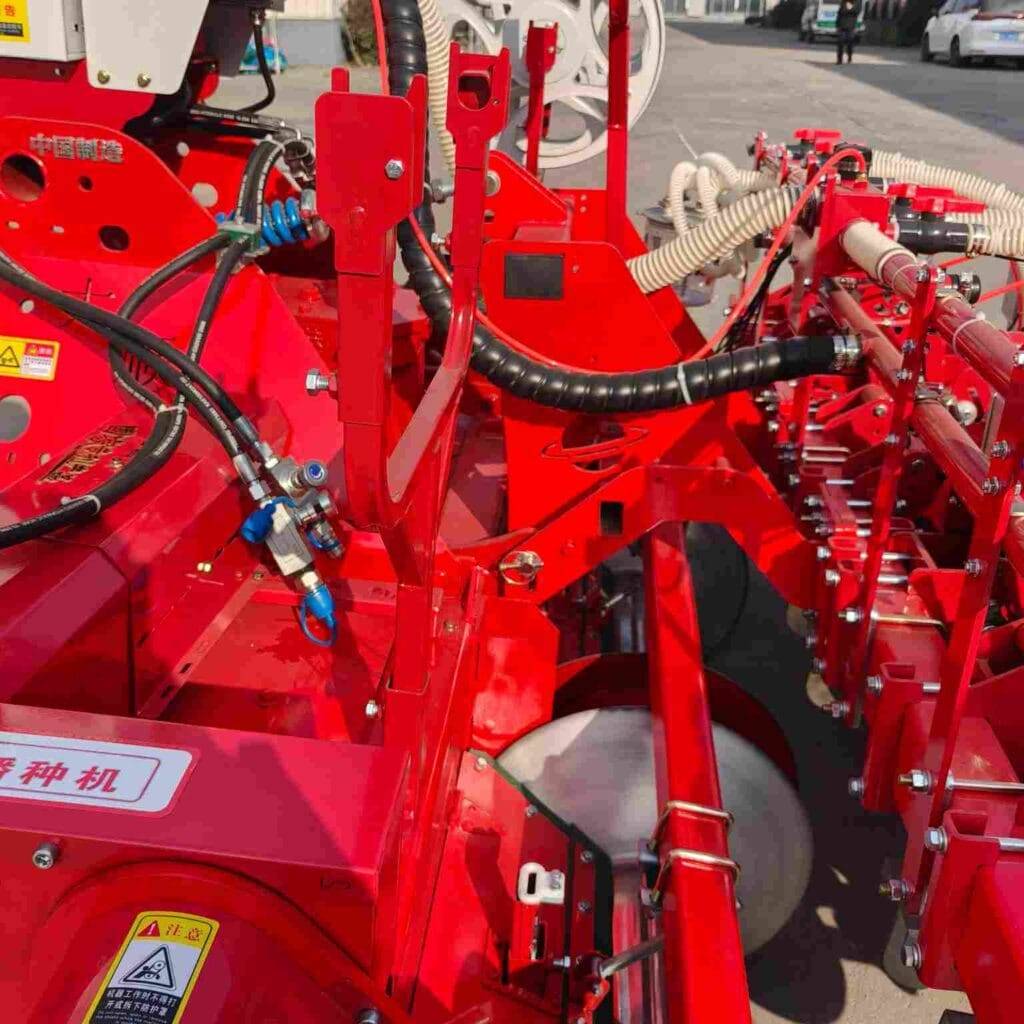
The central component of this system—the suction plate or disc—demonstrates remarkable engineering sophistication. Manufacturers meticulously design these plates with specific hole geometries and dimensions tailored to particular seed characteristics including shape, size, density, and surface texture. This adaptability allows farmers to seamlessly switch between different seed types—from minute vegetable seeds and fine cereal grains to larger legume seeds, beet seeds, and specially coated pellets—without compromising accuracy. This flexibility makes pneumatic systems exceptionally versatile across diverse cropping systems and agricultural operations.
The implementation of “single-seed-per-hill” precision drilling delivers multifaceted advantages across agricultural production. From an agronomic standpoint, it creates optimal growing conditions by ensuring uniform plant spacing and consistent sowing depth. This precision eliminates the intense competition for light, nutrients, and water that typically occurs with overcrowded seedlings, resulting in more robust plant development, improved crop uniformity, and maximized yield potential. Economically, this technology generates substantial savings by dramatically reducing seed usage—particularly valuable when working with high-cost hybrid varieties or genetically enhanced seeds. Furthermore, it completely eliminates the labor-intensive and costly process of manual thinning that traditionally follows imprecise sowing methods.
Operational efficiency represents another significant advantage of pneumatic seeding technology. While traditional methods often require substantial manual labor for sowing and subsequent thinning, modern pneumatic seeders enable a minimal crew—typically just two or three operators—to efficiently cover extensive areas, sometimes reaching hundreds of mu per day. This quantum leap in productivity allows farm managers to redirect valuable human resources toward other critical aspects of crop management, including precise irrigation scheduling, targeted fertilization, and integrated pest management strategies.
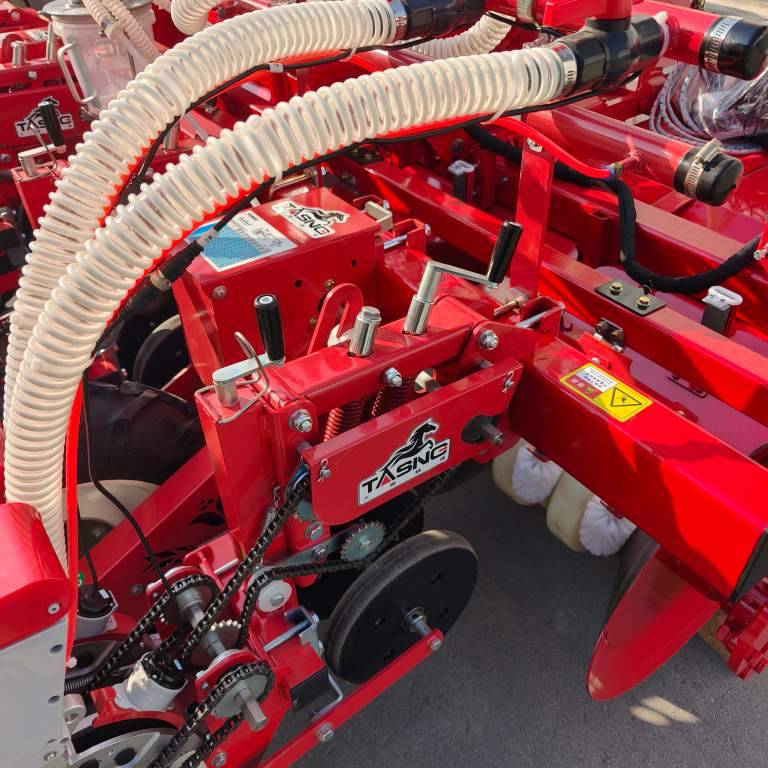
The purely physical working principle underlying pneumatic seed-metering contributes to its exceptional reliability and environmental adaptability. Unlike electronic systems that might be vulnerable to dust, moisture, or electromagnetic interference, pneumatic mechanisms maintain consistent performance across varied terrain and operating conditions. Their relative immunity to vibrations and capacity to function effectively on moderate slopes ensures reliable sowing quality whether deployed on expansive, level fields or undulating landscapes.
Beyond its function as agricultural equipment, pneumatic seeding technology embodies the fundamental philosophy of precision agriculture—optimizing inputs to maximize outputs while minimizing waste. By perfecting the crucial foundational step of precise seed placement, it establishes the essential framework for subsequent precision farming practices. As global agriculture progresses toward greater intensification and intelligence, integrating technologies like variable-rate application and automated guidance systems, pneumatic seeders will undoubtedly continue to play an increasingly vital role in enhancing food security, improving resource efficiency, reducing production costs, and promoting truly sustainable agricultural development worldwide.