
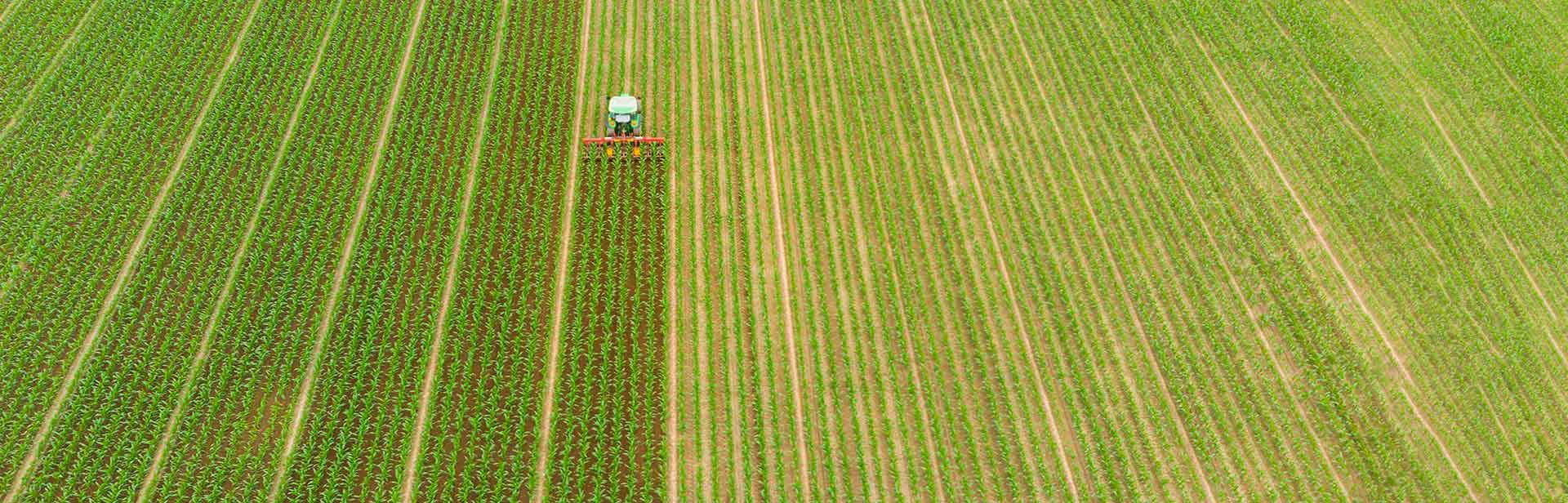
As spring plowing kicks into high gear amidst the roar of machinery, every new-type agribusiness operator must carefully calculate the economic equation: how to reduce production costs while maximizing land productivity, especially in an era of large-scale farming. The comprehensive upgrade of air-suction precision planters provides the optimal solution to this very equation.
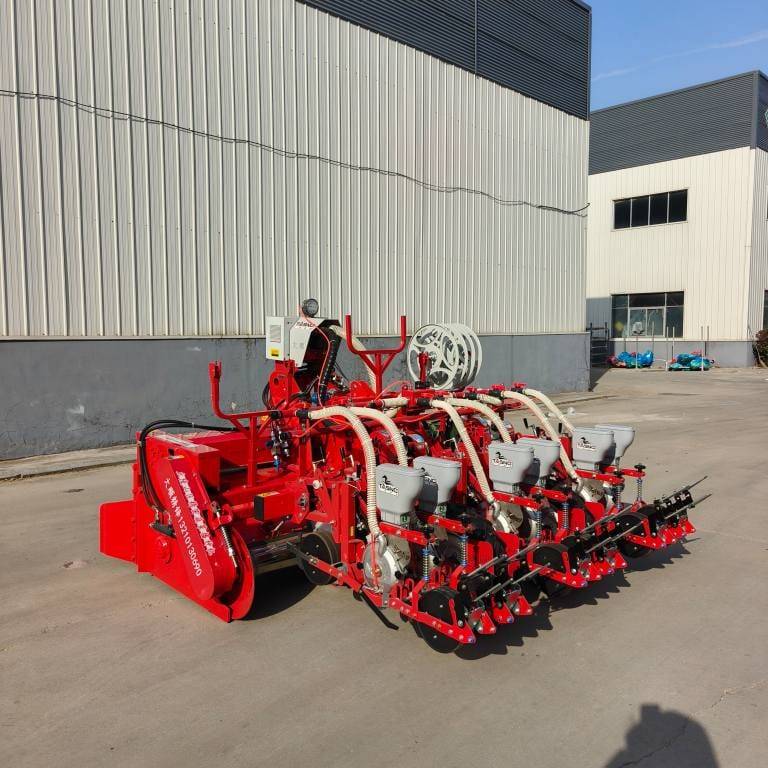
Seeds are the chip of agriculture and a major component of planting costs. Traditional mechanical seeders, unable to control single seeds precisely, often force farmers to increase seeding rates to guarantee emergence, leading to later manual thinning. This wastes valuable seed resources and adds significant labor costs. The advent of the air-suction planter has completely changed this dynamic. Its negative-pressure pickup principle ensures precise one seed per hill sowing. Experimental data shows that compared to traditional mechanical sowing, air-suction seeding can reduce seed usage by twenty to thirty percent. For corn planting, this translates to a saving of fifteen to twenty yuan per acre on seed costs alone. For a large-scale farmer cultivating a thousand acres, this single factor can save tens of thousands of yuan. More importantly, because airflow pickup avoids damaging seeds, the seed integrity rate approaches one hundred percent, significantly improving emergence and virtually eliminating the need for manual replanting due to skips and bare spots. This achieves a complete stand in one go from sowing to emergence.
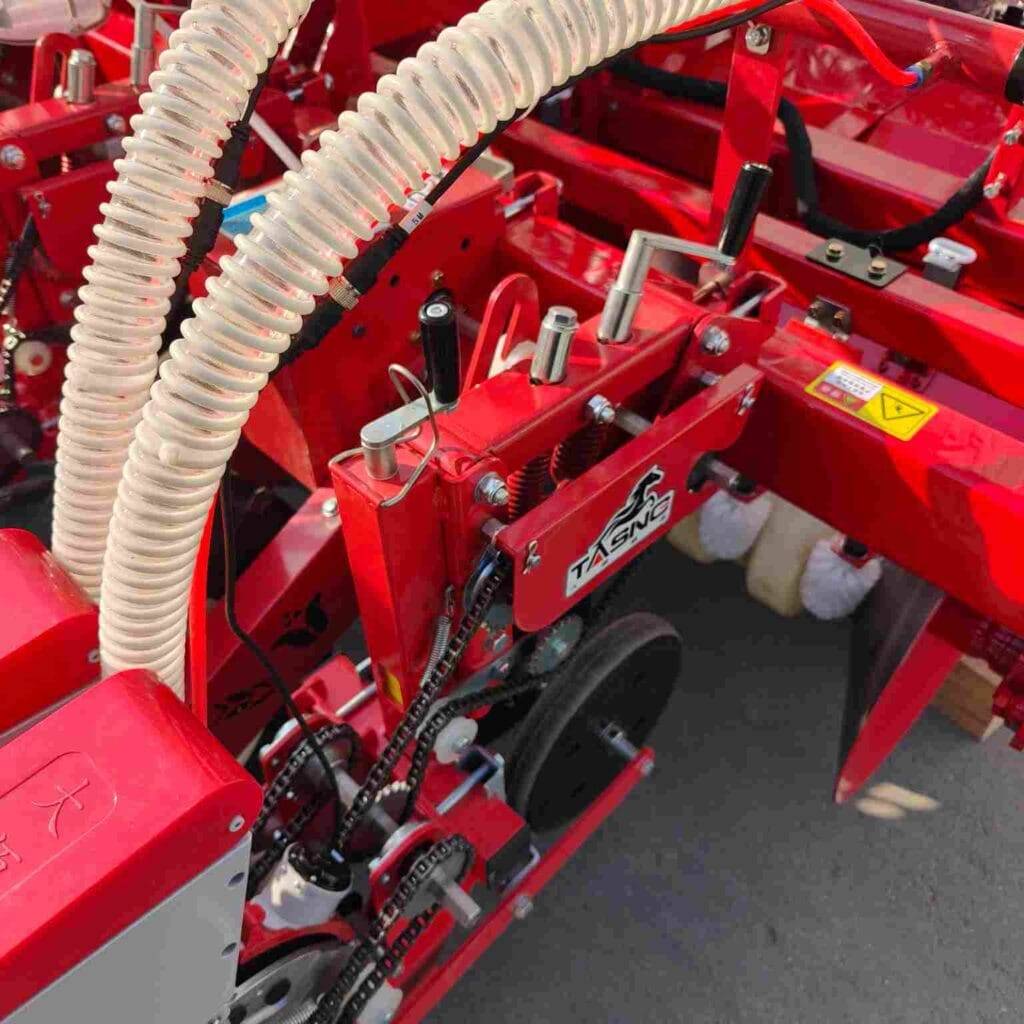
With accelerated urbanization, seasonal labor shortages in rural areas are increasingly prominent. The long thinning period following traditional sowing is a peak time for labor demand and a major headache for growers. The over ninety-five percent plant spacing qualification rate achieved by air-suction planters results in evenly distributed young plants in the field, completely eliminating the need for manual thinning. This change liberates farmers from back-breaking physical labor, allowing them to focus their energy on more critical production stages like field management and crop protection. The cost savings from eliminated thinning labor, based on current market rates, can save another thirty to fifty yuan per acre.
Sowing quality doesn’t just affect costs; it directly impacts final yield. The phenomenon of larger plants overpowering smaller ones, a common result of uneven spacing from mechanical seeders, is a major factor limiting yield increases. The uniform spacing provided by air-suction seeding ensures each plant has equal access to light, nutrients, and water. Uniform emergence, with strong and even seedlings, establishes a solid foundation for building a high-yielding crop community structure. Comparative trials from multiple locations consistently show that fields planted with air-suction seeders, due to their superior crop architecture, generally see yield increases ranging from ten to twenty percent. This potential for increased production can be further amplified when combined with appropriate dense planting techniques.
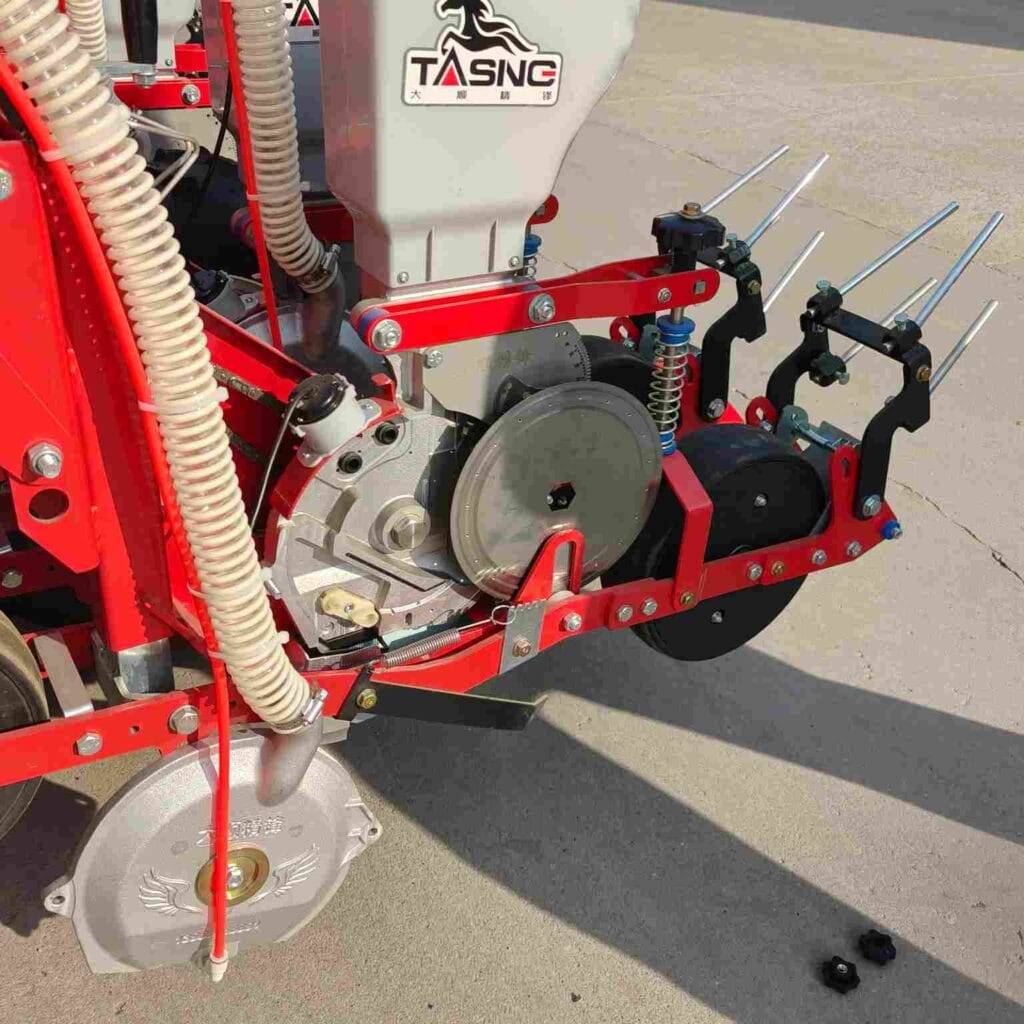
For family farms with diversified planting structures, the versatility of equipment is crucial. By quickly swapping seed plates with different hole patterns, an air-suction planter can easily adapt to various crops like onions, carrots, spinach, soybeans, and corn. This one-machine-for-multiple-uses capability greatly improves equipment utilization rates and avoids redundant investments. As the spring stocking season peaks, efficient, precise, and increasingly intelligent air-suction planters are being continuously delivered to the fields. They are more than just machines; they are a core guarantee for stable income and increased production, injecting powerful technological momentum into food security and rural revitalization. The shift from extensive sowing to precision planting, a revolution led by air-suction technology, is painting the backdrop for a bountiful harvest across vast farmlands.